

In many raid and dungeon encounters, the tank’s primary challenge is not the boss, but the sudden introduction of multiple high-priority adds. Tanking Add Aggro Management is the demanding **Threat Complexity** that requires meticulous threat generation across multiple targets. This management separates expert tanks who execute **Controlled Containment**—securing and positioning all adds safely—from those causing **Chaotic Group Splitting**—where unsecured mobs run rampant, overwhelm DPS, and lead to collateral wipes.
This analysis details the techniques for rapid multi-target threat acquisition, the prioritization of high-lethality adds, and the positional discipline required to keep all enemies stacked for the group’s cleave rotation.
The Challenge of Multi-Target Threat Complexity
Add waves increase threat complexity exponentially. The tank must transition instantly from a single-target rotation (on the boss) to a multi-target cleave rotation (on the adds and the boss), ensuring every new target is secured before DPS can pull aggro. Furthermore, adds often possess unique, high-lethality abilities that must be grouped or positioned away from the raid.
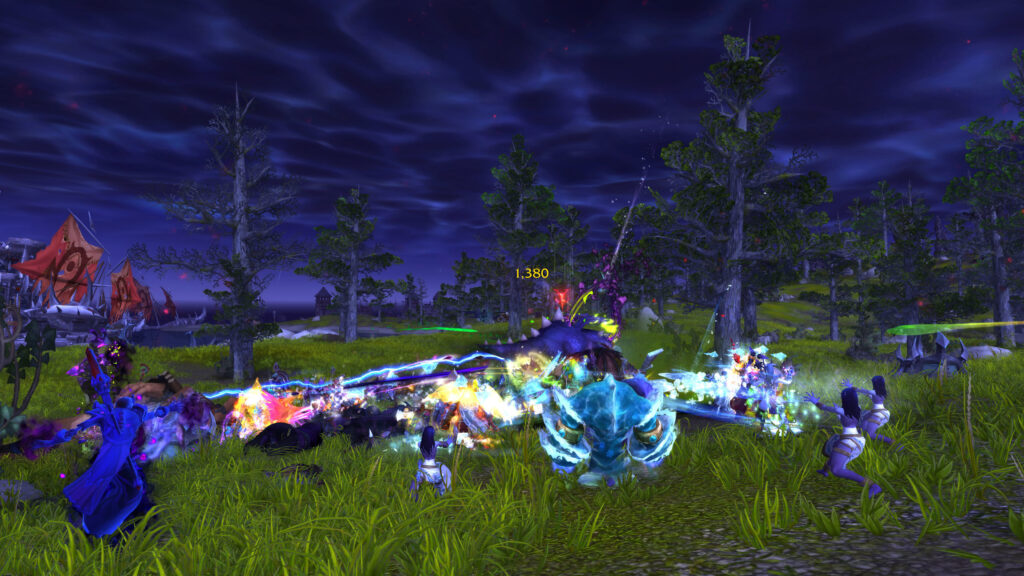
Chaotic Group Splitting occurs when the tank focuses too much on the boss or fails to use adequate AoE threat tools, resulting in DPS pulling aggro on one or two adds. These loose mobs run into the raid, attacking healers, or triggering proximity mechanics, leading to a rapid breakdown of containment.
Rapid Aggro Acquisition Protocol for Adds
Controlled Containment begins with an immediate and decisive response to the add spawn. The tank must execute a rapid aggro acquisition protocol:
- Pre-Targeting: Identify the add spawn point and pre-target the most dangerous add (usually the ranged caster).
- Ranged Threat/Taunt: Use a high-threat ranged ability or Taunt on the highest priority add as it spawns.
- Immediate AoE Burst: Immediately follow the Taunt with a core, high-threat AoE rotation (e.g., Death and Decay, Thunder Clap) to secure all secondary targets as they move toward the tank.
- Positional Anchor: Anchor the entire add group precisely where the DPS can cleave them down (often adjacent to the boss).
Prioritization and Positional Containment
Not all adds are created equal. The tank must prioritize threat generation on adds that possess the highest lethality (e.g., casters with AoE or healers) while ensuring secondary mobs are also secured.
| Add Type | Threat Priority | Positional Requirement |
|---|---|---|
| Caster Add (High Damage) | Tier 1 (Instant Ranged Taunt) | Must be LOS’d or pulled into melee stack immediately. |
| Melee Add (Stacking Debuff) | Tier 2 (AoE Cleave Secure) | Stacked tightly with the boss for cleave, but positioned to avoid cleave hitting the raid. |
| Explosive/Cleave Add | Tier 1 (Ranged/AoE Secure) | Must be positioned away from the main raid group due to frontal cleave mechanics. |
Failure to position correctly—stacking an explosive add with the main cleave group—is a failure of containment that leads to immediate casualties.
Sustaining Threat on Splits
In scenarios where a boss splits into two (e.g., tank swap required), the tank must manage the threat complexity of two equally dangerous targets. This requires dedicating continuous resource spending to both targets via rotational AoE and single-target builders, ensuring the off-tank can secure the swap target without the remaining target accidentally pulling onto the DPS.
Conclusion
Tanking Add Aggro Management is a high-stakes demonstration of threat complexity. By executing a rapid acquisition protocol and maintaining precise positional containment, expert tanks ensure all adds are secured and positioned for maximum DPS efficiency. This discipline separates Controlled Containment, leading to swift elimination, from Chaotic Group Splitting, which guarantees encounter failure.